
Our Blog
Recent Articles

How to Fix Fight or Flight Response: 6 Gentle Steps
God designed your body with an incredible capacity for protection. The fight or flight response is a powerful gift, meant to keep you safe in moments of real danger. However, after long periods of stress or illness, this system can become dysregulated, leaving you in a constant state of alert. It’s like a beautiful instrument playing a single, jarring note on repeat. Restoring harmony is possible. This guide explores how to fix fight or flight response by partnering with God’s original design for your body. We will look at how to gently signal safety to your nervous system, allowing it to return to the peaceful rhythm He intended for you.
Key Takeaways
Your symptoms might be signals from your nervous system: Persistent fatigue, anxiety, and brain fog are not just in your head; they can be physical signs that your body’s protective fight or flight response is stuck in overdrive, and recognizing this is the first step toward finding relief.
You have God-given tools to find calm right now: You can interrupt the stress cycle in the moment with simple, practical actions. Practices like deep breathing, grounding yourself in the present, and turning to Scripture are powerful ways to signal safety to your brain and body.
Lasting peace comes from consistent, faith-filled habits: Moving beyond a constant state of alert involves creating gentle, daily rhythms that your body can trust. Prioritizing sleep, nourishing your body, and leaning into community and prayer build a strong foundation for your nervous system to rest and restore.
What is the Fight or Flight Response (and Why Does It Get Stuck)?
God designed your body with an incredible, built-in alarm system. It’s often called the fight or flight response, and its purpose is to protect you from danger. When you perceive a threat, whether it’s a car swerving into your lane or a stressful confrontation, your body instantly prepares you to either face the challenge or flee to safety. This response is a gift, a powerful tool for survival in a fallen world.
However, this system was never meant to stay on 24/7. When your brain and nervous system are functioning as intended, this response turns on when needed and, just as importantly, turns off when the danger has passed. But for many of us struggling with chronic symptoms, it’s like the alarm is stuck in the “on” position, even when there is no immediate threat. This constant state of high alert can be exhausting, and it’s often at the root of many long-term health challenges.
What happens in your body
When your brain signals a threat, your body undergoes a series of rapid, automatic changes. Your adrenal glands release stress hormones like adrenaline, causing your heart to pound and your breathing to become quick and shallow. Your pupils dilate to sharpen your vision, and blood rushes to your major muscle groups, tensing them for action. This gives you a burst of strength and energy to react to the situation at hand. It’s a beautifully orchestrated process designed to keep you safe. Every part of this response is intentional, preparing you to handle a genuine physical danger.
Why your nervous system gets "stuck" in survival mode
The fight or flight response is supposed to end once a threat is gone, allowing your body to return to a state of rest and calm. But what happens when it doesn’t? After prolonged periods of stress, trauma, or illness, the nervous system can become dysregulated. This means your body gets stuck on high alert, and your brain continues to send out stress signals even in the absence of real danger. Instead of completing the stress cycle and calming down, your system remains in survival mode. This imbalance is what many people experience as a limbic system impairment, leading to a cycle of chronic symptoms. Learning how to guide your body back to a place of safety is key to restoring balance to your nervous system.
Are You Stuck in a Chronic Fight or Flight State?
Living in a constant state of alert is exhausting. God designed our bodies with a brilliant system to protect us from immediate danger, but we were never meant to live there. When your nervous system gets stuck in this survival mode, it can feel like you’re always waiting for the other shoe to drop, even when there’s no obvious threat. Your body is working so hard to keep you safe that it doesn’t have the resources for rest, digestion, or restoration.
This isn’t a personal failing or a lack of faith; it’s a physiological state. Your body is simply trying to protect you based on past experiences and perceived threats. The first step toward finding calm is gently recognizing the signals your body is sending. If you’ve been feeling unwell for a long time without answers, see if any of these signs resonate with you. Recognizing them is not about dwelling on the negative, but about bringing awareness to what needs loving attention and God’s grace.
Physical signs to look for
When your body is stuck in a high-alert state, it can show up in very physical ways. You might notice a constantly racing heartbeat, a feeling of tightness in your chest or stomach, or persistent trouble falling and staying asleep. Many women experience a deep, unshakable tiredness that no amount of rest seems to touch. This can be accompanied by brain fog that makes simple tasks feel monumental, ongoing digestion problems, frequent headaches, or muscles that always feel tense and sore. These are not just random symptoms; they are often the body’s way of communicating that its nervous system is overwhelmed and needs support to find its way back to a place of peace.
Emotional and cognitive signs to look for
This chronic stress state doesn't just affect your body; it deeply impacts your heart and mind, too. You might find yourself feeling easily overwhelmed or annoyed by things that never used to bother you. Perhaps anxiety or even panic seems to come out of nowhere. Some people experience a sense of numbness or detachment, as if they’re watching their life from a distance. It can be hard to focus or make decisions, and your motivation may be at an all-time low. When you’re stuck in this mode, it’s difficult to think clearly or stay on task. If this sounds familiar, our two-minute screening can help you gain clarity on whether these challenges are related to a dysregulated nervous system.
How to Calm Fight or Flight Right Now
When your body feels stuck in a state of high alert, it can be incredibly draining and discouraging. You might feel a sense of panic, a racing heart, or a wave of exhaustion that seems to come from nowhere. In these moments, it’s easy to feel like you’ve lost control. But I want you to know there is hope. God designed your body with incredible systems for finding calm, and you can learn to work with them.
These steps aren’t about striving or forcing relaxation. Instead, think of them as gentle invitations to your nervous system, reminding it that you are safe. These are practical tools you can use right now, in the middle of a stressful moment, to help guide your body back to a place of peace. If you’re wondering if your nervous system is chronically dysregulated, you can take our 2-minute screening to see if brain rewiring might be a supportive next step for you.
1. Breathe deeply to activate your vagus nerve
One of the most powerful tools God gave us for calm is our own breath. Deep, slow breathing helps activate the vagus nerve, a key part of the system that tells your body it’s safe to relax. When you feel that familiar surge of stress, try this: Inhale slowly and deeply through your nose for a count of four, letting your belly expand like a balloon. Hold for a moment, and then exhale slowly through your mouth for a count of six. This simple act can help calm the body’s stress response and shift you out of that alert state. It’s a beautiful, built-in way to find stillness.
2. Ground yourself with the 5-4-3-2-1 technique
When your mind is racing with worries, a simple grounding technique can bring you back to the present moment. The 5-4-3-2-1 method is a wonderful way to do this. Pause and gently notice:
5things you can see around you.
4things you can feel (the chair beneath you, your feet on the floor).
3things you can hear (a bird outside, the hum of the fridge).
2things you can smell.
1thing you can taste.
This grounding technique helps interrupt anxious thought loops by focusing your attention on the physical world God has placed you in right now. It’s a gentle anchor in the here and now.
3. Use cold water to slow your heart rate
This might sound surprising, but a splash of cold water can be a quick and effective way to calm your system. When cold water hits your face, it triggers a natural reflex that slows your heart rate and helps conserve oxygen. You can splash your face with cold water, run your wrists under a cold tap, or even hold an ice cube in your hand for a minute. This physical reset can be just what your body needs to interrupt the fight or flight signal and find a moment of calm. It’s a simple, physical way to signal safety to your brain.
4. Find a physical release for your body
When you’re in fight or flight, your body is flooded with stress hormones like adrenaline, preparing you to move. Giving your body a way to physically release that energy can be incredibly helpful. This doesn’t have to be an intense workout. You can try gently shaking out your hands and feet, doing a few simple stretches, or even just tensing and then releasing all the muscles in your body. Taking a brisk five-minute walk can also help in releasing built-up stress hormones. This completes the stress response cycle and helps your body understand that the "danger" has passed.
5. Practice the 90-second rule
Did you know that the chemical rush of an emotion, like fear or anger, only lasts in your body for about 90 seconds? Anything beyond that is us re-triggering the loop with our thoughts. The 90-second rule is a practice of pausing when you feel a strong emotion rising. Instead of reacting, just notice the physical sensations in your body. Breathe through them for a minute and a half, allowing the chemical wave to pass without getting swept away by it. This practice helps you regain control over your emotional responses and shows you that you don't have to be ruled by them.
6. Anchor your mind in Scripture
More than any technique, the most powerful anchor we have is the Word of God. When your mind is filled with fear, you can actively replace those thoughts with His truth. Keep a few verses of peace on a note card or on your phone. When you feel overwhelmed, read them aloud. Remind your heart of what is true: "Do not be anxious about anything..." (Philippians 4:6-7), "The Lord is my shepherd..." (Psalm 23:1), "So do not fear, for I am with you..." (Isaiah 41:10). Grounding yourself in Scripture isn't a distraction; it's a declaration of faith that re-centers your mind and spirit on the unchanging character of God. This is the foundation of our entire Christ-centered program.
Long-Term Rhythms for a Regulated Nervous System
While knowing how to calm your nervous system in a moment of distress is a wonderful skill, lasting peace comes from building consistent, life-giving rhythms. Think of it as creating a safe and predictable environment for your body, one where it doesn’t have to be on high alert all the time. When your nervous system learns it can trust your daily patterns, it can finally begin to shift out of that chronic fight or flight state. This isn't about adding more rules to your life; it's about lovingly stewarding the body God gave you.
Creating these rhythms is a foundational part of what we guide you through in the Limbic System Rewire program. It’s a process of gently retraining your brain and body to recognize safety. By intentionally incorporating small, steady habits into your days, you send a powerful message to your nervous system: "You are safe. You can rest. You are cared for." Over time, these simple acts of faithfulness build a strong foundation for your well-being, allowing your body to find its God-given balance. Let’s walk through some of these foundational rhythms together.
Prioritize restorative sleep
God designed sleep as a time for our bodies to rest and restore. When you’re stuck in a survival loop, quality sleep can feel out of reach, yet it’s one of the most powerful ways to support your nervous system. Your body does its most important repair work while you sleep. Aiming for a consistent bedtime and wake-up time, even on weekends, helps regulate your internal clock. Creating a peaceful evening routine, like turning off screens an hour before bed and making sure your room is cool and dark, signals to your body that it’s time to wind down. This simple rhythm can profoundly impact your body’s ability to rest and recover.
Move your body regularly
Gentle, consistent movement is a beautiful way to tell your body it’s safe and to help it process stress hormones. This isn’t about intense workouts that can sometimes feel like another stressor. Instead, focus on movement you truly enjoy. A quiet walk outside, some simple stretching in the morning, or putting on music and dancing in your kitchen can all be wonderful options. The goal is to connect with your body in a joyful way, celebrating the gift of movement. When you move your body regularly, you help complete the stress cycle and release pent-up tension, making space for calm.
Nourish your body with supportive foods
The food you eat provides the very building blocks your nervous system needs to function well. Think of it as lovingly providing your body with the resources it requires to find balance. Focusing on balanced, whole foods can make a significant difference. Including a source of protein, healthy fats, and complex carbohydrates in your meals helps keep your blood sugar stable, which in turn supports a more stable nervous system. Foods rich in magnesium, like leafy greens and nuts, and those with omega-3s, like salmon, are especially supportive. This isn’t about restrictive dieting, but about gratefully nourishing the body God has given you.
Limit stimulants like caffeine and sugar
When your nervous system is already on high alert, stimulants like caffeine and sugar can sometimes add fuel to the fire. They can create physical sensations, like a racing heart or jitteriness, that your brain might interpret as a threat, keeping the fight or flight cycle going. You don’t necessarily have to cut them out completely, but it can be helpful to mindfully notice how they affect you. Consider reducing your intake or swapping your afternoon coffee for a calming herbal tea. This small adjustment can reduce triggers for physical anxiety and give your nervous system a better chance to settle.
Spend time in nature
There is something deeply calming about being in God’s creation. Spending time in nature is a simple yet profound way to help regulate your nervous system. It could be as simple as sitting on a park bench, tending to a few plants on your windowsill, or taking a walk through a wooded area. Being in a natural environment helps pull us out of our own heads and connects us to the beauty and peace of the world God made. This practice can help reduce stress and remind our bodies and souls that we are part of something much larger than our immediate struggles.
Create a daily rhythm your body can trust
Ultimately, all these practices work together to create a predictable daily rhythm. When your body knows what to expect, like when it will be fed, when it will move, and when it will rest, it can stop living in a state of constant anticipation. This consistency is deeply reassuring to a sensitized nervous system. It’s not about being rigid or perfect, but about creating a gentle, reliable structure for your day. This rhythm becomes an anchor, signaling to your brain and body, day after day, that you are safe and secure. This predictability is a cornerstone of nervous system regulation.
Lean into community and fellowship
We were not created to go through hard things alone. God designed us for connection and community. Sharing your heart with a trusted friend, receiving a warm hug, or laughing with loved ones can have a direct, positive impact on your physical body. These moments of connection can release oxytocin, a hormone that fosters feelings of safety, bonding, and calm. Intentionally making space for fellowship is not just good for the soul; it’s a powerful way to support your nervous system. It reminds you that you are seen, loved, and supported, which is a core part of our Christ-centered beliefs.
How Faith Supports Your Nervous System
When your body feels like it’s in a constant state of alarm, finding true rest can seem impossible. This is where your faith becomes one of the most powerful resources for restoring your nervous system. As believers, we know our spiritual health is deeply connected to our mental and physical well-being. God designed us as whole beings, and He provides a pathway to peace that addresses every part of us.
Leaning on your faith isn’t just a comfort; it’s a practical strategy for helping your nervous system shift out of survival mode. It provides an anchor outside of your symptoms and circumstances, giving you a firm place to stand when the ground beneath you feels shaky. By intentionally engaging with God through prayer, Scripture, and trust, you can actively participate in calming the storm inside. This isn't about ignoring your physical struggles, but about inviting God's presence and truth into the middle of them. This spiritual foundation offers a unique and profound stability that no other method can replicate, creating a sense of safety that allows your body to finally stand down from high alert and begin to find its way back to balance.
Finding peace through prayer and Scripture
Prayer is your direct line to the Prince of Peace. It’s more than just a list of requests; it’s a conversation that quiets your spirit and realigns your focus. The simple act of turning your worries over to God can serve as a powerful form of meditation, promoting a sense of calm that ripples through your entire nervous system. Research has even shown that people who engage in regular prayer report lower levels of stress and greater emotional well-being.
Similarly, immersing yourself in Scripture anchors your mind to something unshakable. When your thoughts are racing with fear or frustration, God’s Word offers a counter-narrative of hope, love, and truth. It reminds you of His promises and His faithfulness. Studies confirm that regularly reading Scripture can lead to higher life satisfaction and reduced feelings of anxiety, providing a firm foundation when everything else feels uncertain.
Trusting God's sovereignty for lasting calm
Lasting calm comes from a place of deep trust. It’s the quiet confidence that God is in control, even when your health and circumstances feel chaotic. This doesn’t mean you won’t face challenges, but it means you don’t have to carry the weight of them alone. Releasing the burden of trying to fix everything yourself and placing your trust in God’s sovereign plan allows your nervous system to finally relax. This belief can build incredible emotional resilience during stressful times.
This posture of surrender is one of the most effective ways to find peace. When you truly believe that God is working all things together for your good, fear loses its grip. Your faith becomes a powerful coping mechanism that helps you face each day with grace. Instead of being tossed around by every new symptom or setback, you can rest in the assurance that you are held by a loving Father who has a purpose for your life.
When to Seek More Support
Sometimes, the simple steps we take on our own are enough to bring a sense of calm. But what about when they’re not? It’s easy to feel discouraged when you’re doing all the “right” things but still feel stuck in a cycle of stress and symptoms. You might be praying, reading Scripture, and trying to rest, yet the physical and emotional weight remains, leaving you wondering if you’re doing something wrong. Please hear this with all the love in my heart: reaching for more support is not a sign of failure or weak faith. It’s a sign of wisdom and a courageous step toward true restoration.
God designed us for community. Throughout Scripture, we see people leaning on one another, bearing each other’s burdens, and finding strength in fellowship. When you’ve been walking a difficult road alone for a long time, it’s natural to need someone to come alongside you with a map and a lantern. Recognizing that you need a more structured path is the first step. If your body has been in a state of high alert for a long time, it can take dedicated, consistent practice to guide it back to a place of peace. Let’s look at how to know when it’s time to seek more guidance and what a truly supportive, Christ-centered approach can offer.
Signs your current approach isn't enough
If you feel like you’re constantly battling your body, it might be time for a new strategy. When symptoms like fatigue, brain fog, or digestive issues are persistent and make daily life feel like a struggle, it’s a clear signal that your nervous system needs more support. Chronic stress can make it difficult to think clearly, stay focused, and can even lead to more significant health challenges down the road. If your own efforts aren’t leading to lasting change, it’s okay to acknowledge that you may need a more guided approach. You can take our two-minute screening to see if brain rewiring will help your specific health challenges. It’s also wise to talk with your doctor to discuss any persistent symptoms you’re experiencing.
What a Christ-centered approach looks like
A Christ-centered approach to nervous system regulation is grounded in faith, community, and God’s design for your body. It moves beyond simple techniques and invites God into the process. This means intentionally connecting with trusted friends, family, or mentors who can offer prayer and encouragement. It also involves learning how to quiet your body’s stress response through practices like prayerful breathing, which anchors your mind on Scripture while calming your physical being. Instead of just trying to manage stress on your own, you learn to surrender it. Our structured program is built on these principles, providing a clear, faith-filled path to help you partner with God in restoring your health from the inside out.
Related Articles
Frequently Asked Questions
Is being "stuck" in fight or flight the same as having anxiety? That's a great question because the feelings can be very similar. While anxiety is often part of the experience, thinking of it as a "stuck" fight or flight response helps us see the root of the issue. It's not just a mental or emotional problem; it's a physiological state where your body's alarm system is dysregulated. Understanding this helps us move from just managing feelings to gently retraining the body and brain to recognize safety again.
I've tried some of these calming techniques before without much success. Why would they work now? Many of us have been there, trying a breathing exercise in a moment of panic and feeling like it did nothing. When your nervous system is highly sensitized, a single technique might feel like a drop in the bucket. The real change comes from consistency. These practices work best when they are part of a structured, daily rhythm that, over time, retrains your brain's response. It's less about a single action and more about creating a new, consistent pattern of safety for your body.
How long does it take to regulate my nervous system? Will I see results quickly? Regulating your nervous system is a process of building new pathways in your brain, much like building strength in a muscle you haven't used in a while. It's not an overnight fix. While the simple techniques in the post can offer immediate relief in a stressful moment, lasting change comes from steady, faithful practice. The goal isn't a quick solution but a deep, foundational shift that brings lasting peace and resilience to your body.
The post mentions nourishing foods but also says your program doesn't rely on strict diets. Can you explain this? Absolutely. We believe in lovingly nourishing the body God gave you with whole, supportive foods because it provides the resources your nervous system needs. However, our approach is different from programs that require strict elimination diets. The core of our work is retraining the brain to stop sending out false danger signals. As the brain learns it's safe, the body often becomes less reactive, and many people find their food sensitivities naturally decrease without having to follow rigid rules.
If my faith is strong, shouldn't that be enough to calm my nervous system? Your faith is your most powerful anchor, but it's not meant to be your only tool. Think of it this way: if you had a broken arm, you would pray for comfort and also go to a professional to have the bone set. A dysregulated nervous system is a physical issue, not a spiritual failing. We can have complete trust in God while also taking practical, wise steps to care for the body He gave us. Our approach is about partnering with God, using both faith and brain-based tools to find restoration.

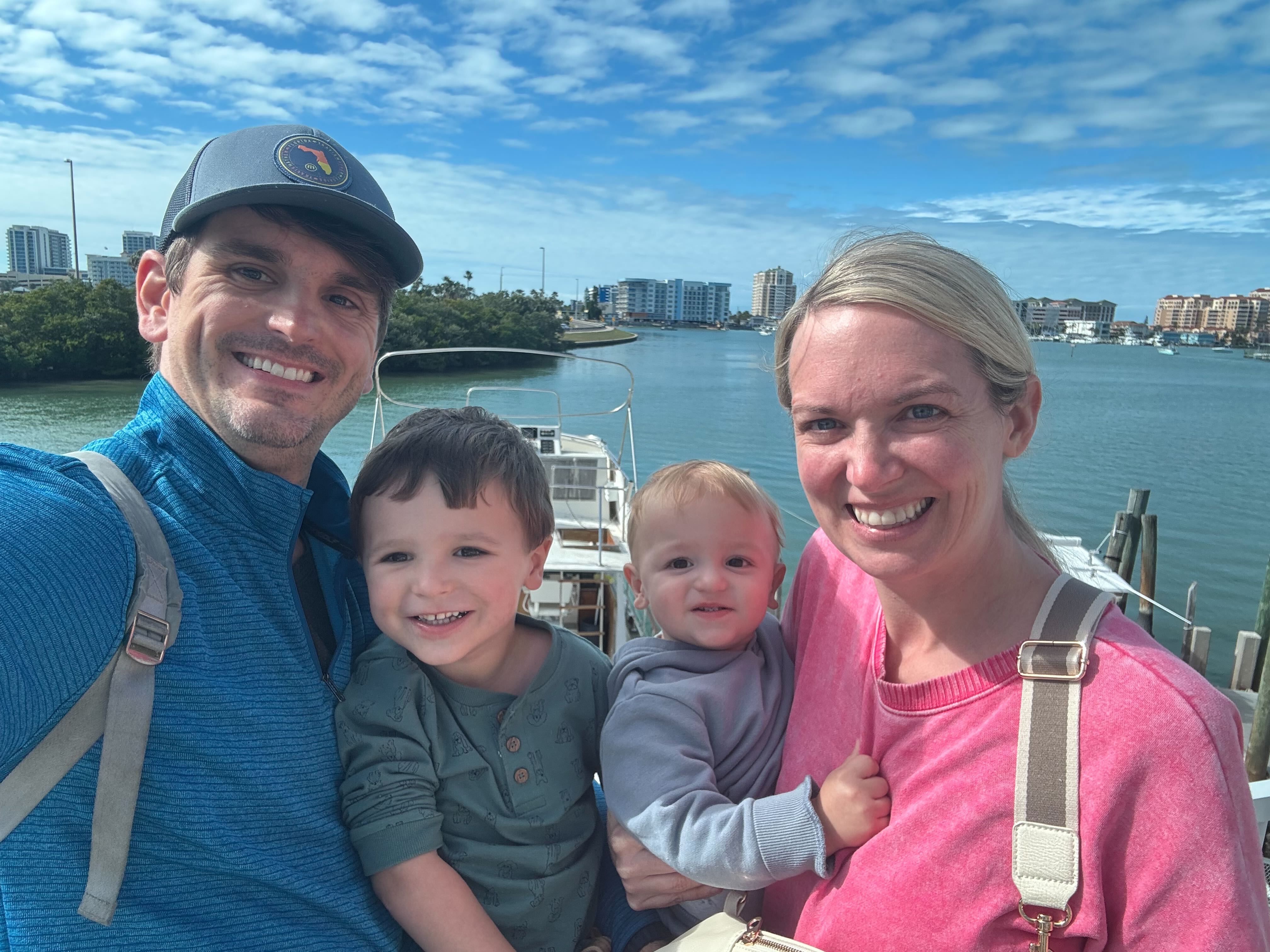
Meet the Founders
Brooklyn Hanna — FDN-P, RN, Cognitive Behavioral Coach CEO & Lead Brain Rewiring Coach
Brooklyn's journey to founding Limbic System Rewire wasn't born in a classroom — it was forged through years of personal suffering. After toxic mold exposure and other major life stressors, Brooklyn was hit with over 18 chronic symptoms, including severe brain fog, extreme fatigue, food and chemical sensitivities, insomnia, anxiety, and more. She was diagnosed with Lyme disease, mold illness, SIBO, chronic fatigue syndrome, autoimmunity, hormone imbalances, and mast cell activation syndrome.
She saw dozens of conventional and natural doctors, spent years on restricted diets, detox protocols, and supplement regimens — at one point she was only able to eat 2 foods. Nothing brought lasting relief.
Then Brooklyn discovered brain rewiring. In just 2 weeks, she experienced more improvement than she had seen in years. She went all in. Within 6 months, her life was completely transformed — she stopped all supplements, began eating freely, ran miles, and lifted weights. Her chronic limitations were gone.
As a Registered Nurse, Functional Diagnostic Nutrition Practitioner (FDN-P), and Cognitive Behavioral Coach, Brooklyn combined her clinical training with her lived recovery to create the Limbic System Rewire program. Her mission: to show others that the root cause of chronic symptoms isn't just a label — it's a dysregulated nervous system that can be rewired with faith and neuroplasticity.
Nick Hanna — Certified Christian Life Coach Co-Founder & Brain Rewiring Coach
Nick was there through every stage of Brooklyn's journey — he witnessed her suffering, and he witnessed her complete transformation. That front-row experience ignited a deep calling to help others find the same freedom.
A Certified Christian Life Coach who specializes in brain retraining, Nick trained extensively in the Limbic System Rewire methodology to coach alongside Brooklyn. He brings theological depth, pastoral care, and genuine compassion to every client interaction. Together, Nick and Brooklyn bring over 10 years of combined coaching experience and have helped over 3,000 clients walk the path from chronic illness to wholeness — in Christ.
Copyright 2026 Limbic System Rewire All Rights Reserved
Hanna Coaching, LLC
Contact Us Here: +1 (727) 658-6129
Disclaimer - Refund Policy - Terms and Conditions of Use of this Site
Contact us for questions at support@limbicsystemrewire.com