
Our Blog
Recent Articles

Food Nutrition and Neuroplasticity: Reclaiming Balanced Eating Habits
Food is meant to be a gift, a source of connection, and a way to celebrate the goodness of life. Yet, for many women, food has become a source of anxiety. You might find yourself down to five "safe" foods, terrified that one wrong bite will lead to a week of brain fog or fatigue. That restricted life isn't what God intended for you.
This is where the intersection of food nutrition and neuroplasticity offers a path to helping you move from a place of fear to a place of feasting. Empowerment means having the capacity to sit at a church potluck, a birthday party, or a family holiday and participate fully. It means your worth isn't tied to the "cleanliness" of your diet. Using food nutrition and neuroplasticity, you can retrain your brain to see food as nourishment again rather than a threat.
WATCH: Should You Retrain Your Brain To Eat What You Want?
The Science of the "Food Fear" Loop
To understand why you react to food, you have to look at the brain's command center: the limbic system. The amygdala and hippocampus act as security guards. When they perceive a threat, whether it’s a toxic mold exposure, a viral infection, or chronic emotional stress, they flip a "danger" switch.
Once that switch is flipped, your brain begins to associate everything around you with danger. If you happen to be eating a specific food when your stress bucket overflows, your brain might tag that food as the culprit. Through that negative association, your brain creates a "fear loop." Every time you see or smell that food, your body initiates a stress response before it even reaches your mouth.
The Inflammatory Cascade
When the brain senses a "threat" from food, it releases chemical messengers called cytokines. Those cytokines circulate through the body and brain, creating a "tired-but-wired" feeling.
Research shows that chronic inflammation from food sensitivities disrupts sleep and mood. It can even divert tryptophan, which is the amino acid needed to make serotonin and melatonin, away from those calming chemicals and toward "excitatory" pathways that cause alertness and anxiety. That mindset keeps your nervous system in a state of high-alert, making it harder to tolerate anything new.
The Mental Cage of "Clean" Eating
Many women fall into the trap of "biohacking" their way to health. You read online that sugar is the enemy, or that histamines are the root of all evil. You learn about oxalates, lectins, and sulfur. Soon, your world shrinks. You aren't just eating healthy; you are performing an act of legalism.
That mindset often leads to a "sick identity." You start calling yourself a "sensitive person" or a "limited eater." Those labels tell your limbic system that your current state is permanent. The more you avoid, the more your brain fears.
Hence, the stress response stays activated, releasing cortisol at inappropriate times. That spike in cortisol often happens at 2 or 3 a.m., waking you up in a panic. You might think it was the food you ate, but often it’s the fear of the food and the resulting hormonal surge that causes the wakefulness.
Neuroplasticity: The Way Back to the Feast
The good news is that your brain has the capacity to change and adapt throughout your entire life. Just as your brain learned to fear food, it can learn to feel safe again. That process is the core of food nutrition and neuroplasticity.
Training the "Limbic Toddler"
Brooklyn Hanna often describes the limbic system as a toddler. It doesn't understand logic; it only understands safety. If you are constantly researching illness and "bad" foods for five hours a day, that toddler believes the world is a scary place.
To retrain the brain, you have to send signals of safety, which involves:
Interrupting the Fear: When you feel that "pit in your stomach" about a meal, consciously choose to calm your breathing.
Pivoting to Truth: Replace the thought "This will hurt me" with "My body is designed to process nutrients efficiently."
Habituation: Slowly reintroducing foods in a calm, regulated state.
Through consistent practice, you "prune" the old pathways of fear and "grow" new pathways of safety. Eventually, the brain realizes that the cookie or the cheeseburger isn't a predator. The alarm stops ringing, and the symptoms begin to fade.
Reclaiming Your Body as God's Temple
We must address the pressure women feel to have the "perfect" body or the "perfect" diet. Society tells us that self-care is about restriction and optimization. But true self-care is about stewardship without obsession.
Your body is a temple, but a temple isn't meant to be a prison. If your "healthy" diet keeps you from serving at your church or enjoying your nephew’s cake, that diet has become an idol. Reclaiming your mind means putting God back at the center of the table.
The Spiritual Seat: Feasting vs. Gluttony
There is a profound difference between a feast and gluttony. A feast is a worshipful, communal celebration of God’s provision. Gluttony is a "tastelessness" that keeps eating because it isn't finding satisfaction in the gift or the Giver.
Many people over-restrict because they are afraid of gluttony, or they over-indulge because they are trying to "comfort" their stress. Both extremes stem from a malnourished vision of God. Freedom comes from eating mindfully and worshipfully.
The Bible tells us in Matthew 6 not to worry about what we will eat or drink. That isn't just a spiritual suggestion; it’s a neurological "kill switch" for the stress response. When you stop worrying, you activate the parasympathetic nervous system, the "rest and digest" state. In that state, your immune system is stronger, and your digestion is more robust.
Walking in Power and Love
2 Timothy 1:7 reminds us that God gave us a spirit of power, love, and a sound mind. A "sound mind" is a rewired mind. It is a mind that can look at a menu and feel peace rather than panic.
Brooklyn’s story is a testament to that freedom. She went from being 25 pounds underweight and couch-bound to eating whatever she craves, whether that’s a smoothie or a burger. She reclaimed her life through the power of Jesus and the science of neuroplasticity. That same freedom is available to you.
Practical Steps to Food Freedom
If you are ready to start retraining your brain, try these shifts:
Stop the Research: Give your "limbic toddler" a break. Stop searching for "bad" ingredients for 30 days. Focus instead on the Word of God.
Eat Worshipfully: Put your phone away. Sit down. Pray. Taste the food. Praise God for the flavors.
Challenge the Beliefs: Ask yourself, "Why do I believe I can't eat this?" If the answer is fear-based, it’s a candidate for retraining.
Visualize Health: See yourself at a holiday dinner, laughing and eating with friends, feeling energized and well.
The journey of food nutrition and neuroplasticity is about more than just a diet. It is about a brave woman reclaiming her seat at the table of life. You don't have to live in the "wilderness" of restriction forever. The promised land of freedom is waiting.
Enjoying Your Meal as Blessings from God
The dinner table may feel like a battlefield for those struggling with chronic sensitivities. One day, you are enjoying a meal with family, and the next, you are scrutinizing labels for histamines, oxalates, or salicylates.
Reclaiming your health is a brave act. It requires moving past the "food fear" that often traps women in cycles of restriction and social isolation. Through the lens of food nutrition and neuroplasticity, we can see that the plate is rarely the enemy. Instead, the brain's internal alarm system is simply stuck on "high alert."
You are not an accident, and your body was designed for restoration. This month, celebrate your womanhood by choosing freedom over fear. Whether you want to eat more whole foods or just want to be able to enjoy a pizza with your kids, your brain has the capacity to get you there.
Trust the process. Trust the science of neuroplasticity. Most importantly, trust the One who created the feast in the first place.
References:
Ash, M. (2024, March 13). Lifestyle and nutrient modulators of neuroplasticity, brain health and energy. NutriLink.
Segersten, A. (2025, October 1). How food sensitivities affect sleep. Nourishing Meals.
Desiring God. (2021, October 29). Indulge, diet, repeat: Breaking the cycle of overeating.

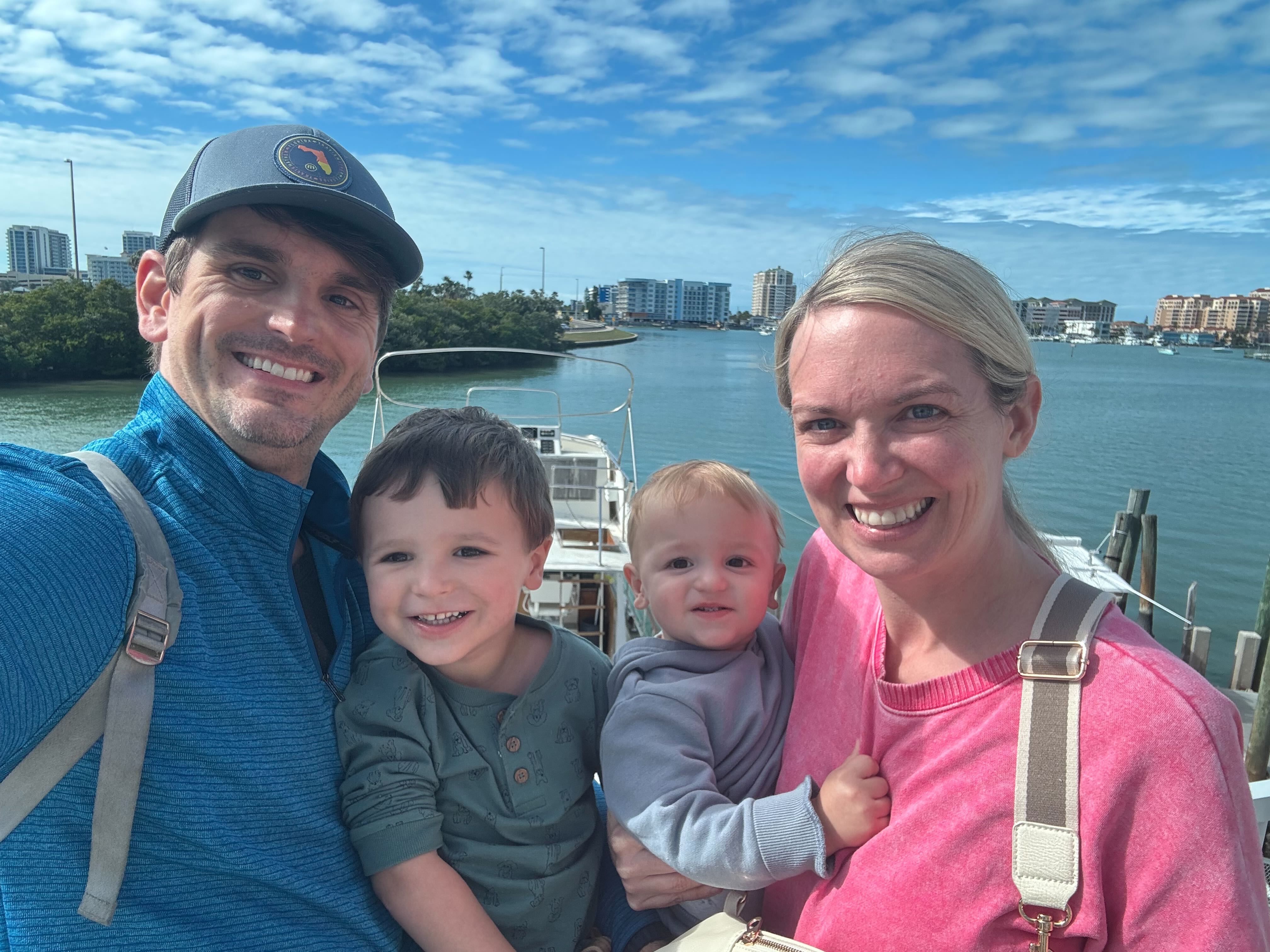
Meet the Founders
Brooklyn Hanna — FDN-P, RN, Cognitive Behavioral Coach CEO & Lead Brain Rewiring Coach
Brooklyn's journey to founding Limbic System Rewire wasn't born in a classroom — it was forged through years of personal suffering. After toxic mold exposure and other major life stressors, Brooklyn was hit with over 18 chronic symptoms, including severe brain fog, extreme fatigue, food and chemical sensitivities, insomnia, anxiety, and more. She was diagnosed with Lyme disease, mold illness, SIBO, chronic fatigue syndrome, autoimmunity, hormone imbalances, and mast cell activation syndrome.
She saw dozens of conventional and natural doctors, spent years on restricted diets, detox protocols, and supplement regimens — at one point she was only able to eat 2 foods. Nothing brought lasting relief.
Then Brooklyn discovered brain rewiring. In just 2 weeks, she experienced more improvement than she had seen in years. She went all in. Within 6 months, her life was completely transformed — she stopped all supplements, began eating freely, ran miles, and lifted weights. Her chronic limitations were gone.
As a Registered Nurse, Functional Diagnostic Nutrition Practitioner (FDN-P), and Cognitive Behavioral Coach, Brooklyn combined her clinical training with her lived recovery to create the Limbic System Rewire program. Her mission: to show others that the root cause of chronic symptoms isn't just a label — it's a dysregulated nervous system that can be rewired with faith and neuroplasticity.
Nick Hanna — Certified Christian Life Coach Co-Founder & Brain Rewiring Coach
Nick was there through every stage of Brooklyn's journey — he witnessed her suffering, and he witnessed her complete transformation. That front-row experience ignited a deep calling to help others find the same freedom.
A Certified Christian Life Coach who specializes in brain retraining, Nick trained extensively in the Limbic System Rewire methodology to coach alongside Brooklyn. He brings theological depth, pastoral care, and genuine compassion to every client interaction. Together, Nick and Brooklyn bring over 10 years of combined coaching experience and have helped over 3,000 clients walk the path from chronic illness to wholeness — in Christ.
Copyright 2026 Limbic System Rewire All Rights Reserved
Hanna Coaching, LLC
Contact Us Here: +1 (727) 658-6129
Disclaimer - Refund Policy - Terms and Conditions of Use of this Site
Contact us for questions at support@limbicsystemrewire.com